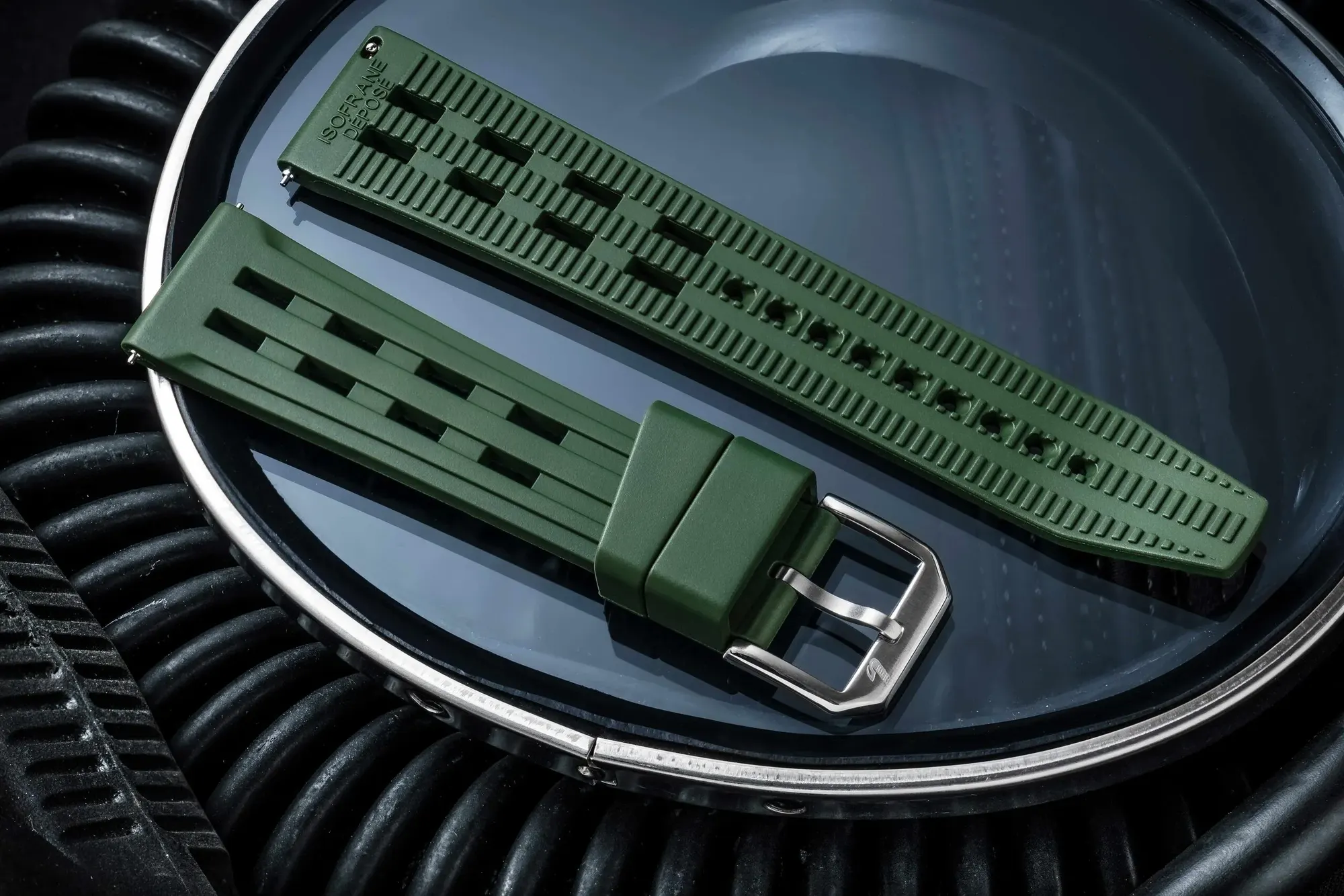
Rubber watch straps all look similar in a product photo. On the wrist, and after a year of diving, swimming and sun, the material makes all the difference. The three compounds you will meet are silicone, FKM and natural rubber. Here is how they actually compare.
Silicone: soft, cheap and short-lived
Silicone straps are inexpensive to produce and feel soft out of the box, which is why they dominate the low end of the market. The trade-offs show up quickly. Silicone has low tear resistance, so a nick at the spring bar hole can grow into a split. The surface attracts lint and dust like a magnet, and it tends to feel sticky against wet skin. For a beater watch it is fine. For a strap you want to live with for years, it is the weakest of the three.
FKM: the modern synthetic
FKM is a fluoroelastomer, a family of synthetic rubbers prized for chemical and heat resistance. It is a genuinely good strap material: durable, resistant to UV and sweat, and smooth to the touch. Many premium brands use it. What it lacks is the density and springback of a vulcanised natural compound, and as a fluorinated material it does not fit every buyer’s preference for natural materials.
Vulcanised natural rubber: the original tool-strap material
Natural rubber, vulcanised for durability, is the material dive straps were originally built from in the 1960s, and it is what the genuine ISOfrane® strap is made from today. The compound is dense and resilient, holds its shape around the wrist, and is hypoallergenic. ISOfrane® uses no silicone, no FKM and no PFAS in its straps, which are made in Italy to the same design that defined the category: ladder ventilation slots and a ribbed underside that lets skin breathe underneath the strap.
Which one should you choose?
If price is everything, silicone will do until it tears. If you want a solid synthetic, FKM is a respectable choice. If you want the material with the longest track record on real dive watches, with ventilation designed for wet wrists, vulcanised natural rubber is the one to beat. You can compare all colours and sizes in the ISOfrane® shop, and the FAQ covers materials and care in more detail.
Frequently asked questions
Is silicone or rubber better for a dive watch?
Vulcanised natural rubber is denser, more tear-resistant and less prone to attracting lint than silicone. Silicone is cheaper and initially softer, but usually needs replacing sooner.
Does natural rubber cause skin irritation?
The vulcanised natural rubber used in ISOfrane® straps is hypoallergenic, and the ribbed underside plus ventilation slots keep air moving between strap and skin, which helps on hot days and after diving.
What is the ISOfrane® strap made of?
A proprietary vulcanised natural rubber compound, made in Italy, with no silicone, no FKM and no PFAS.